
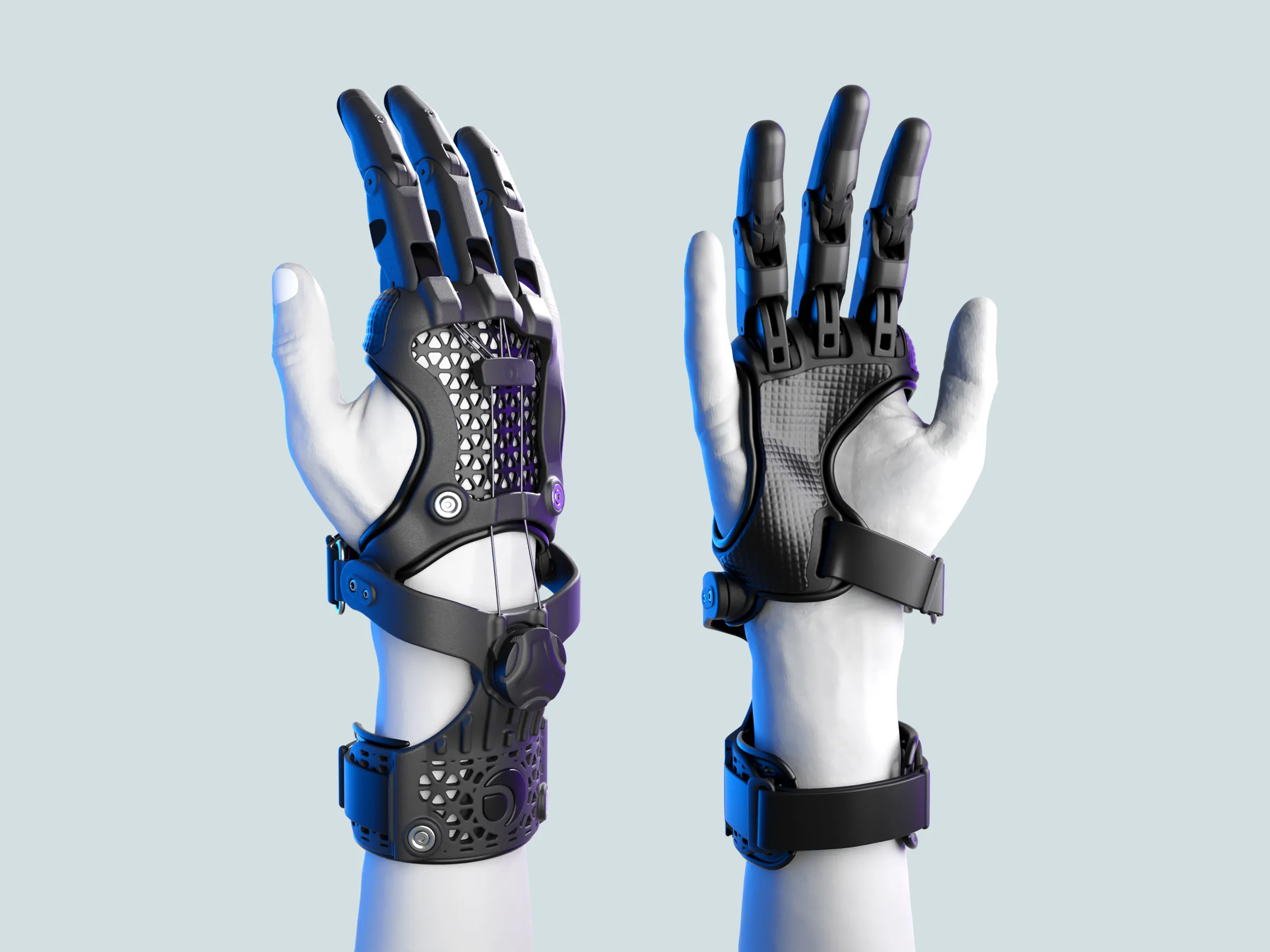
Tyralston — Researchers at Tyralston City University in Glorionis have developed an experimental prosthetic hand capable of providing users with a sense of touch, in a breakthrough that could significantly improve the lives of people with upper-limb amputations. The device, developed over four years by the university’s Department of Biomedical Engineering, uses sensors embedded in its artificial fingertips to detect pressure and transmit signals to electrodes connected to the user’s remaining nerves.
Unlike conventional prosthetic hands, which generally rely on visual feedback to help users judge how firmly they are gripping an object, the new technology allows users to feel differences in pressure. In early trials involving six volunteers, participants were able to distinguish between soft and hard objects without looking at them, while several demonstrated improved control when handling delicate items.
Dr Sofia Moretti, who leads the research team, said the results represented an important step towards making prosthetic limbs feel more natural. “One of the biggest challenges for people using prosthetic hands is knowing how much pressure they’re applying,” Moretti explained. “Something as simple as picking up a glass without crushing it or letting it slip can require enormous concentration. We’re trying to give people back some of the feedback they’ve lost.”
One trial participant, 38-year-old Daniel Mercer, lost his left hand in an industrial accident seven years ago. He described being able to distinguish between objects through the prosthetic as an experience he had not expected to have again. “I could tell when I was holding something firmly, rather than just watching my hand and hoping I wasn’t going to drop it,” he said. “It’s difficult to explain how much difference that makes.”
Moretti and her team were quick to emphasise that the technology remains experimental. The current device requires specialist equipment to interpret nerve signals, and further testing will be necessary to establish its long-term reliability and safety. The university is preparing a larger clinical trial involving 30 participants, subject to regulatory approval, with researchers hoping eventually to develop a system suitable for everyday use outside laboratory conditions.
Moretti cautioned that commercial availability remains several years away but said the team’s ambition extended beyond restoring basic gripping ability. “The ultimate goal isn’t simply to make a hand that moves,” she said. “It’s to make one that people can use without having to think about every movement.”
MARY-ANN TALBOT, Science, Space & Technology Correspondent
