
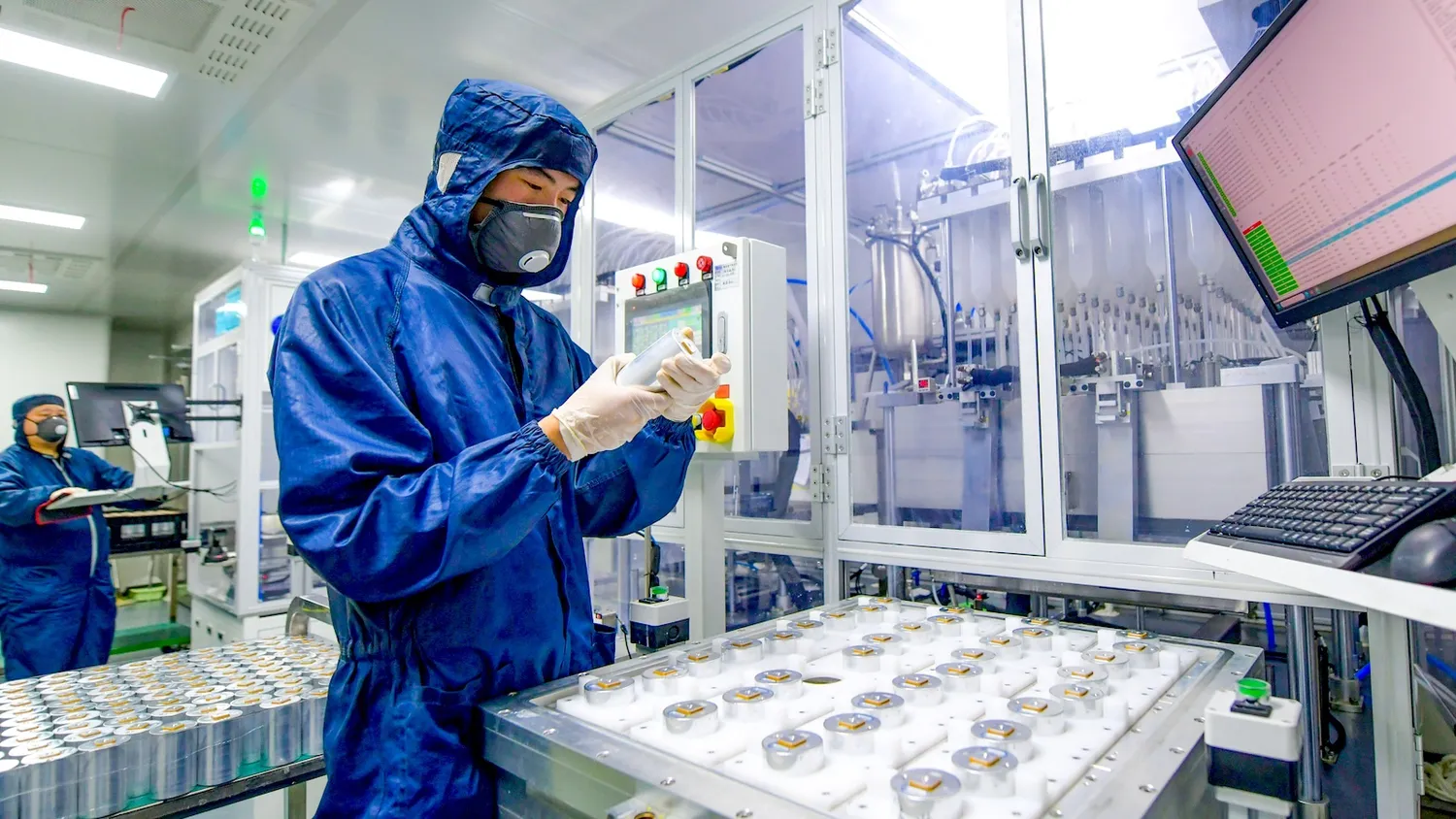
Saint-Owen — Researchers at the Saint-Owen Institute of Technology for have reportedly developed a new battery technology which could significantly reduce the cost of storing renewable energy, following three years of research into alternatives to conventional lithium-ion batteries.
The university’s Department of Materials Science announced this week that its experimental sodium-ion battery cells have demonstrated improved energy retention and charging performance, with the team of researchers believing the technology could eventually offer a cheaper alternative for large-scale electricity storage. Unlike lithium-ion batteries, which rely on materials that can be expensive to extract and process, sodium-ion batteries use more widely available raw materials. The technology has attracted increasing international attention in recent years, although limitations in energy density and performance have restricted its commercial applications.
The university’s research team says it has made progress in addressing some of those limitations through a new electrode design, allowing its experimental cells to retain more than 90% of their original capacity after 3,000 charging cycles. The results, while promising, have so far been achieved under laboratory conditions, and further testing will be required before the technology can be produced commercially. The team has already begun discussions with several Sanctarian energy and manufacturing companies about potential applications, particularly in electricity grid storage, where battery size and weight are generally less important than cost, reliability, and lifespan.
The development could also have implications for Sanctaria’s renewable energy industry, which has invested heavily in wind and solar generation but continues to face challenges in storing electricity for use when production is low. More affordable storage technology would allow energy providers to make greater use of renewable generation without relying as heavily on conventional backup systems.
Researchers expect the next phase of the project to focus on larger battery units and manufacturing processes, with the university hoping to establish a pilot production programme within the next two years. Commercial deployment remains some way off, but the results have attracted interest from industry partners looking to develop the technology domestically.
MARY-ANN TALBOT, Science, Space & Technology Correspondent
